
Solano County City Directory Collections
Directory research in Solano County starts with a shelf map. No single publisher reached every community, and assuming otherwise wastes hours. The Solano County Genealogical Society holds the strongest early anchors: an 1871 Solano and Napa Counties volume, an 1874 Solano section, McKenney's District Directory for 1878-79, and McKenney's Eight County Directory for 1884-85. Its catalog also lists undated Vallejo directories, Fairfield-Suisun directories, and a long run of telephone books. The undated sets still need catalog or reference confirmation before anyone pins exact years to them.
| Collection | Years | Where Held | Access |
|---|---|---|---|
| Solano and Napa Counties directory | 1871 | Solano County Genealogical Society library | Catalog/reference verification |
| Solano section | 1874 | Solano County Genealogical Society library | Catalog/reference verification |
| McKenney's District Directory | 1878-79 | Genealogical Society collection | Local research access |
| McKenney's Eight County Directory | 1884-85 | Genealogical Society collection | Local research access |
| Vallejo and Fairfield-Suisun directories | Undated runs | Society catalog and local repositories | Ask for exact volume years |
| Vacaville Reporter archive | 1883-1946 | Solano County Library digital library | Searchable online archive |
No continuous Polk shelf list for the county exists. Library catalog entries have to be checked title by title. FamilySearch fills real gaps with Great Registers from 1867-1898, a naturalization card index running roughly from the 1850s into the 1950s, and a probate card index spanning roughly 1850 to 1998. An account or image limit may apply, though. None of these are directory volumes. In a county with a thin run, they carry the load anyway.
Solano County Directory Years and Publishers
Directory titles matter more than they look. A spine that says Solano County does not guarantee equal coverage for every town, farm road, or small settlement. It simply does not promise that. The 1878-79 District Directory and the 1884-85 Eight County Directory came from McKenney under different plans. One covered a district, and the other spanned eight counties. Their city lists, page order, and local detail simply do not match. The 1871 volume went further and paired Solano with Napa. The 1874 catalog anchor, meanwhile, points to a Solano section inside a larger work. Record each title exactly when you log a find.
Telephone books add a second layer to any Solano County residents directory search. The Society holds an undated telephone collection. It can place a surname near a rough period. Check the cover year first. Note the publisher too. The community a book served also shapes what it holds. A criss-cross section, where one appears, runs from street to name; the plain alphabetical section runs the other way. Keep those two directions straight in your notes.
A careful city directory citation captures more than a name. It notes the publisher, the year, and the area served. That habit keeps a Solano County resident lookup from leaning on the wrong volume.
Catalog caution. Exact Vallejo and Fairfield-Suisun year runs were not published in the research source, so ask a librarian or society reference contact before claiming a missing year.
Solano County's Six Library Cities
Solano County Library serves Dixon, Fairfield, Rio Vista, Suisun City, Vacaville, and Vallejo through nine locations. Benicia runs its own system yet shares catalog and digital resources with the county network. That split matters when a directory search starts in Benicia or crosses the Carquinez Strait. Begin with the catalog, then ask the branch reference desk whether a volume sits on site, on microfilm, in a special collection, or with a partner.
The Fairfield Civic Center Library at 1150 Kentucky Street keeps a microfilm and fiche reader. Its reference contact line is 1-866-572-7587, and the obituary and newspaper request service accepts a name, event type, date, city or location, and any helpful details. Staff search the event date plus two weeks. The search and an emailed PDF are free; mailed photocopies cost $0.20 per page, and mail requests should allow about three weeks. A city directory may sit at a branch, with a catalog partner, or on a microfilm reader rather than on a public webpage.
Digital Microfilm runs keyword and name searches only on public computers inside a branch. Ancestry Library Edition is also an in-library resource. These limits make a phone or counter request part of the method itself, not a last resort.
See the Solano County Historical Society Fairfield holdings page for the local-history collections it lists.
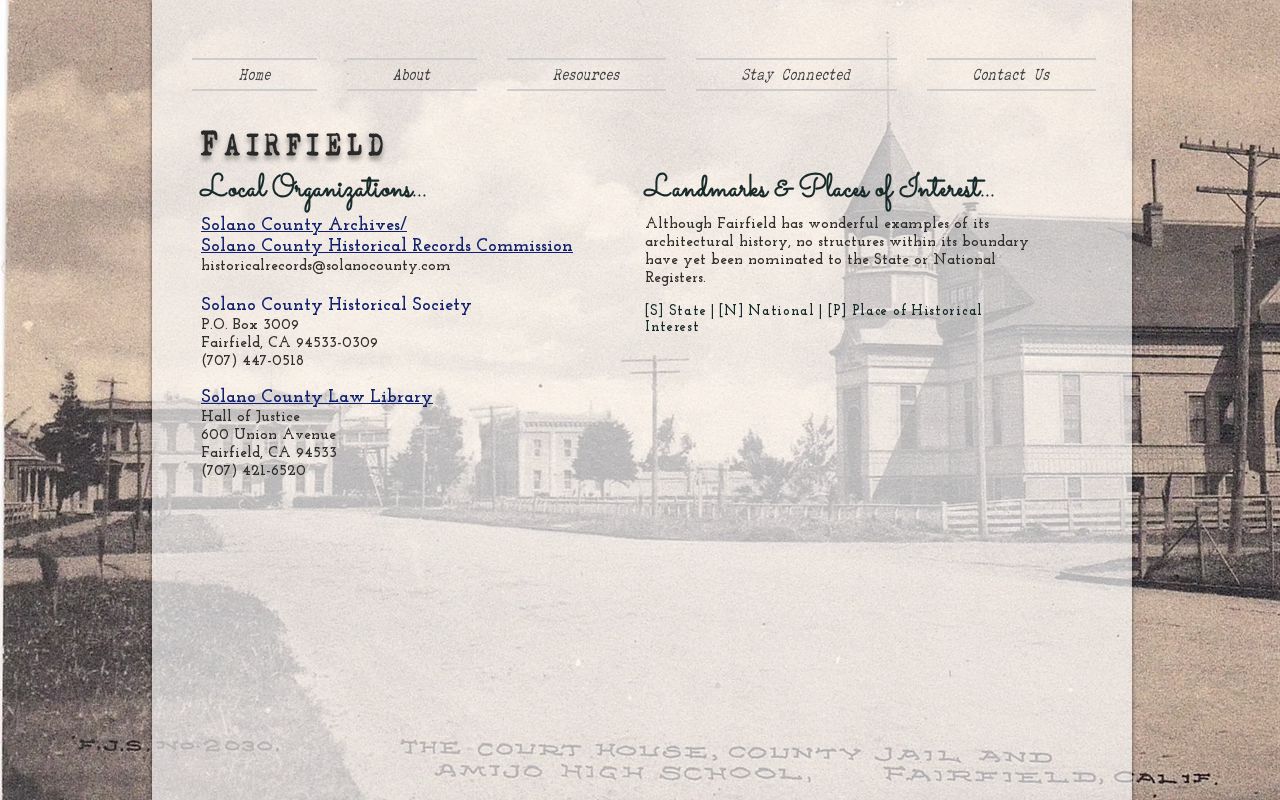
Those holdings point to the local organization network that stands beside library shelves. They do not prove a complete directory run. Title, year, and repository still belong in the citation.
Read a Solano County City Directory Entry
A Solano County directory entry packs a lot into one line. A typical Polk-style format lists a surname and given name first. A spouse often appears in parentheses. Occupation follows, then a residence or business address, and marks such as h for home. A widow notation like “wid Charles” can explain a shift in the head of household. Business entries may carry room or office marks instead. Fields vary by volume. Photograph or transcribe the abbreviation key before you read a single line.
| Name | Surname, given name or initial, with spouse information sometimes in parentheses. |
|---|---|
| Occupation | A historical descriptor that can help distinguish two people with the same name. |
| Address | House number and street, with residence or business notation as the volume defines it. |
| Household mark | Some editions identify a home, a room, or a boarding arrangement; confirm the key. |
| Widow notation | A marker such as “wid Charles” can connect a later entry to an earlier household. |
- Criss-cross directory
- An address-order or street-order section used to turn a place into names and nearby listings.
- Householder index
- A name-centered index that usually points to the principal listed household rather than every person present.
- Abbreviation key
- The volume's legend for short marks; record it before expanding terms from memory.
Solano County City Directory Shelf Clues
Local repositories add context a single alphabetical page cannot. The Vallejo Naval & Historical Museum holds more than 1.4 million Vallejo and Mare Island photographs, bound Vallejo newspapers from 1867-1950, a complete Mare Island Grapevine run from 1942-1996, and Vallejo tax assessment rolls reaching back to 1870. Research visits run by appointment Tuesday through Saturday from noon to 3:00, at $30 per hour. High-resolution digital images cost $10 each for one to five, or $5 each when ordering six or more.
Dixon Archives adds photographs, family histories, searchable Dixon Tribune material, oral histories, and a 930-page Brevities extraction from late nineteenth-century issues through 1950. A birth, death, marriage, visit, or local event recorded there can bridge a directory gap. Contact starts through the county library reference number, so confirm current access before traveling.
Benicia's cemetery search works as another city-level companion. The official Benicia cemetery index covers surveyed burials from 1849-2007 and shows a name, birth and death dates, age, grave location, and section code. It cannot replace a directory. It can, however, test whether a disappearance reflects death rather than a move.
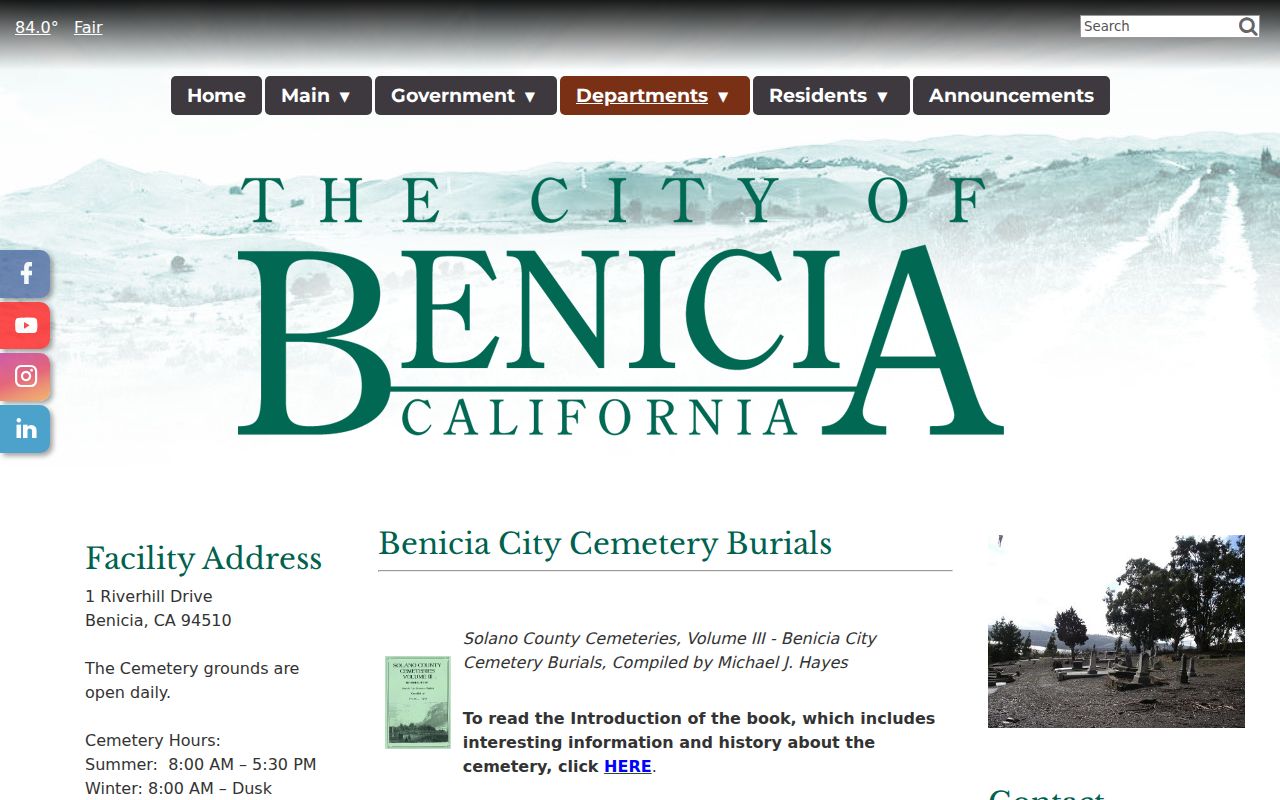
A local cemetery index like the one shown here can close a historical directory trail that the printed volumes leave open. Cite the cemetery result separately from the directory volume itself.
Note: Directories can omit women except as spouses or widows, rural households, nonsubscribers, and communities underrepresented by the publisher.
Trace a Solano County City Directory Household
Treat a directory as a sequence, not a single proof. The address grows stronger when compared across editions rather than quoted from one page. Start near the target date. Keep the exact spelling. Record every address change as you work outward. Pair the volume with census schedules from 1850-1950, then bring in newspapers, deeds, probate, and cemetery records to explain any break. Remember that a listing shows a household, not every person who lived at the address.
- Record the volume title, publisher, year, page, and abbreviation key before copying the entry.
- Follow the name forward or backward in one-to-three-year steps, preserving initials, alternate spellings, spouse marks, and each street address.
- Turn to the criss-cross or street section to identify other listed names at the same address and nearby properties.
- Pair the directory years with released census schedules, using age, birthplace, and family relationships as checks rather than as automatic matches.
- Close a disappearance with the library newspaper index, an obituary request, a cemetery record, or a probate file when the facts support that path.
When the printed page is not digitized, the Solano County Library obituary and newspaper request channel is the practical next step. Give staff the full name, an approximate date, the community, and the type of event. A returned notice can tie a former address to a death, marriage, club, school, or legal item. The directory alone still cannot answer the whole question.
Solano County's Historical Records Bridge
When a modern search stalls, the Historical Records Commission is the county's offline bridge. Its organized collection holds thousands of documents from 1850 forward. These include naturalization records, probate material, and Sanborn maps. The Commission grew from a 21-organization History Round Table proposal. It was established on September 22, 1987. Volunteers then spent roughly three decades organizing and cataloging the material.
This is not a walk-in shelf. A 2015 lease loss moved the collection to Point Richmond storage. Direct research requests go to historicalrecords@solanocounty.com, so ask by name, date, and series. For building context, search the Library of Congress Sanborn map collection as well. Then query the county archive about local sheets by city, year, and street.
Timeline. 1850: Solano County government begins. 1871 and 1874: early directory anchors. 1878-79 and 1884-85: McKenney runs. 1883-1946: Vacaville Reporter archive. 1850 forward: Historical Records Commission series, open by arrangement.
Note: Sanborn maps cover one city and one year at a time, so a search must name both the community and the date rather than assume a countywide run.
Solano County Directory Absence Means Little
A missing name is weak evidence. The volume may skip a rural route or a nonsubscriber. A woman may appear only through a spouse. A misspelled surname can hide a family entirely. Street numbers also shift when a subdivision or road is renumbered. Compare the legal description, census geography, newspaper wording, and Sanborn street context before concluding a household left.
Access has its own limits. FamilySearch catalog records can impose account or image limits. Library Digital Microfilm works only on public branch computers. Society and museum access may require an appointment or a fee. That is why a solid historical search uses several channels: catalog, branch reference, microfilm or fiche reader, online archive, society collection, museum file, and a focused archive request.
When a directory find needs a current record, the modern address-keyed chain belongs with the Solano County street directory workflow. When the question is one person's identity, keep the directory clue apart from the custodian's official record and back it with two independent anchors.